

Raising the Standard:
A Model Resolution for Homeschool Access, Equity, and Workforce Preparedness

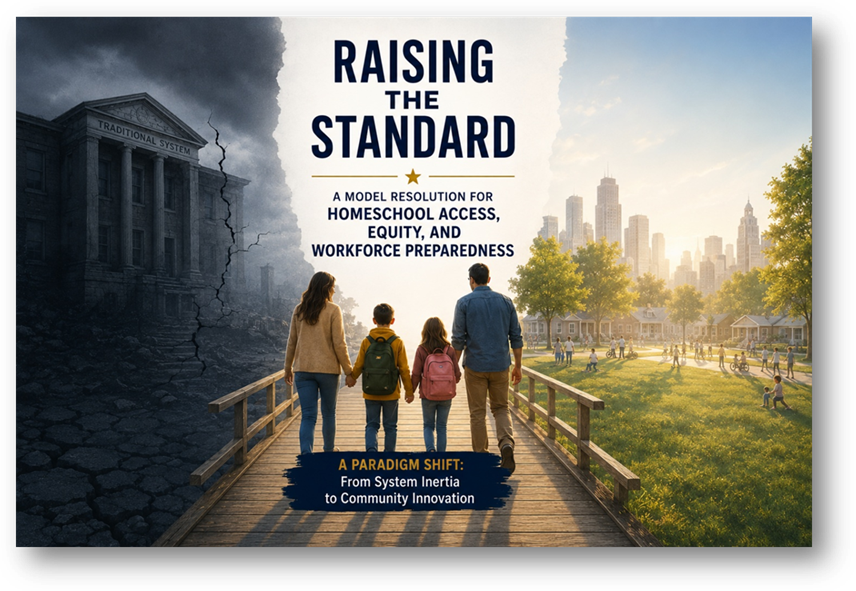
Municipalities across the country are confronting a truth that has been building for decades: our education systems are not keeping pace with the needs of the modern world. The gaps are no longer subtle. They are structural, generational, and increasingly visible in the lives of the young people who pass through our schools and into adulthood. A recent New York Times analysis, “Why U.S. Test Scores Are in a ‘Generation‑Long Decline,’” highlights this widening achievement gap — one that disproportionately harms racial minorities and low‑income households, both urban and rural. The article cites recurring themes in “under‑resourced” districts: chronic absenteeism, inconsistent instructional quality, limited intervention capacity, and persistent teacher shortages.
These last two issues have been explored extensively by P2Solutions — including the January 2026 article “Teacher Shortages: A Preventable Workforce Crisis,” which argued that states could have anticipated and prevented shortages using Department of Labor occupational projections and publicly available workforce data. The same themes surfaced again in a collaborative analysis of the Buffalo Public Schools budget, where structural misalignment between spending and outcomes was laid bare. The long‑term economic consequences of these failures — and the inability of traditional systems to correct course despite vast investment — demand an expedited pivot in how we approach public education.
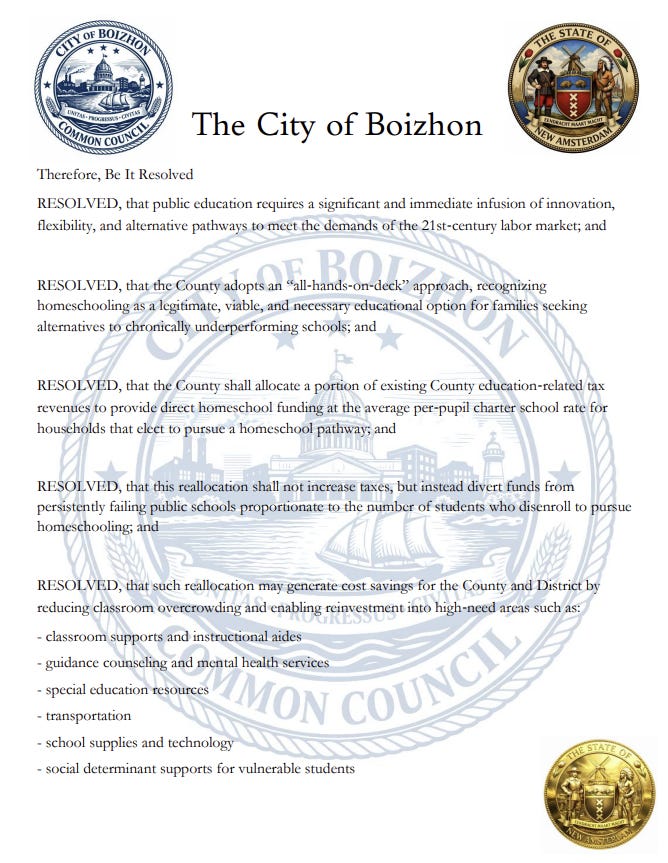
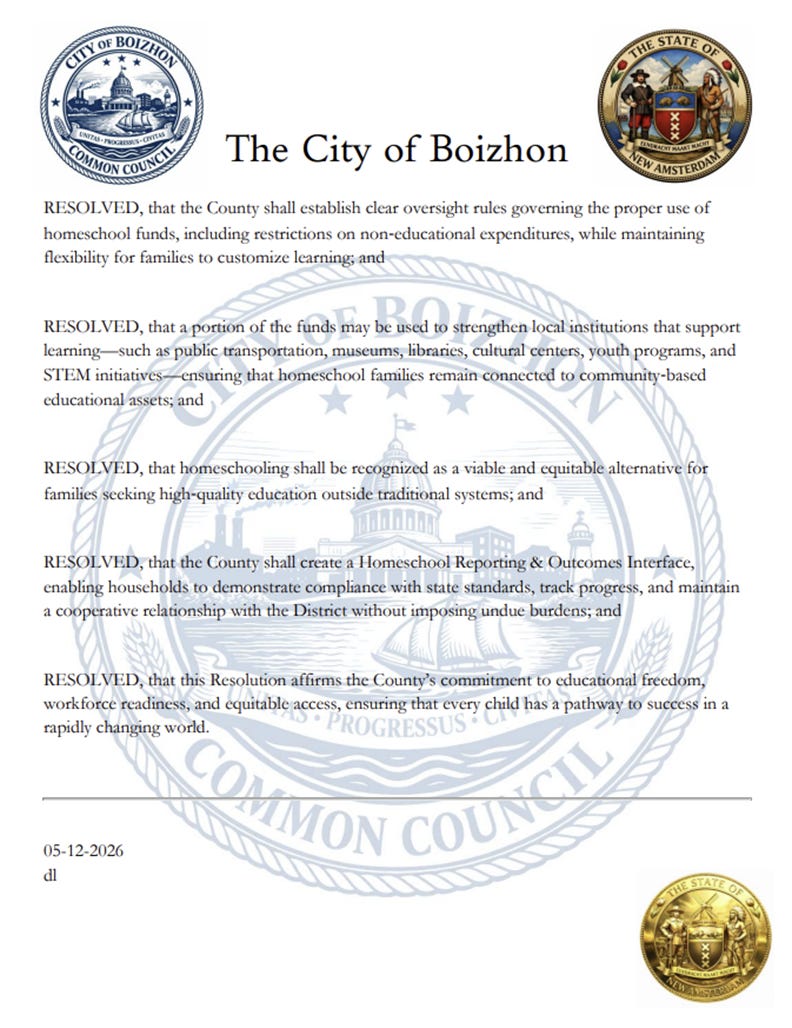
The Home Instruction Access, Equity, and Workforce Preparedness Funding Act — presented at the end of this article — is part of a broader effort to raise the standard of public imagination. The Model Resolution Series is not about critique for its own sake. It is about demonstrating what municipalities could pursue if they were willing to innovate, experiment, and center the needs of families and communities rather than the inertia of systems.
This is not a challenge to high‑performing traditional schools. Strong schools remain essential pillars of any healthy municipality. But where systems are chronically underperforming — where families have waited decades for improvement that never came — municipalities have a responsibility to explore alternative pathways that empower the primary consumer of education: the household.
The Model Resolution imagines a simple but transformative shift. Instead of tying educational opportunity to the performance of a single system, municipalities could allow families who choose homeschooling to receive local education dollars at the average charter‑school per‑pupil rate. No new taxes. No new bureaucracy. Just a reallocation of existing dollars toward the people who have the most at stake.
This approach rejects the rigid, “one‑size‑fits‑all” model that has dominated education reform for generations. Instead, it allows households to assemble modular combinations of curricula, supports, and community resources — a flexible, adaptive ecosystem rather than a monolithic system. Too often, reform efforts swing between sweeping, all‑or‑nothing initiatives that fail to identify their shortcomings until the next political cycle. From “Head Start” to “No Child Left Behind,” we have watched the same pattern repeat. As George Carlin once quipped, “Head start, left behind — someone’s losing ground here.”
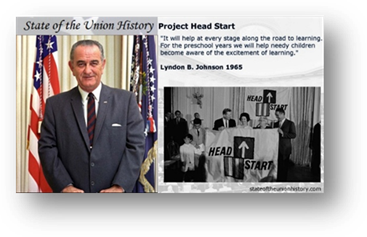
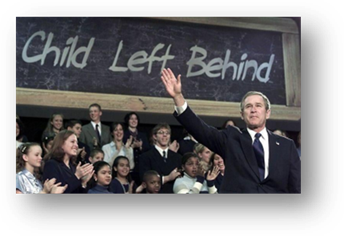

This is not defunding. It is right‑sizing. It keeps dollars in the educational ecosystem while giving families in struggling districts a viable, funded alternative. And “viable” is the key. This is not a call for a massive overhaul that would take decades and billions of dollars while sacrificing today’s students for the hypothetical benefit of tomorrow’s. It is a targeted, immediate shift that expands opportunity without destabilizing existing systems.
Critics argue that such a model would harm low‑income or minority students by diverting funds from traditional schools. But this misunderstands the reality those families already face. The harm is not hypothetical. It is happening now, inside systems that have failed to deliver meaningful improvement despite decades of investment. Protecting the system has not protected the child. And when the system fails, the consequences fall hardest on the families with the fewest options. As Upton Sinclair famously observed, “It is difficult to get a man to understand something when his salary depends upon his not understanding it.”
Municipalities see the downstream effects every day. Adult literacy programs are expanding. GED and HSE programs are overwhelmed. Workforce centers are teaching basic math and reading to adults who spent thirteen years in school. Employers are funding their own remediation pipelines. Public benefits systems are stretched thin by residents who were never prepared to compete in the labor market. Taxpayers pay for the same failure twice: once during K–12, and again through adult remediation and social services.
The Broader Economic Cost: When a Region Cannot Produce a Self‑Sufficient Workforce
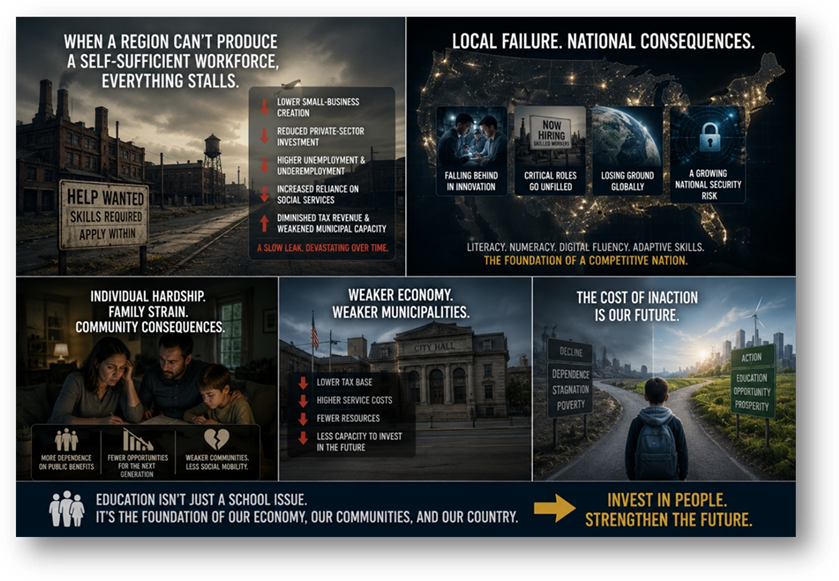
The consequences of educational failure do not end at the schoolhouse door. They compound into the broader economy, shaping the trajectory of entire regions. When a local labor pool enters adulthood without the skills required for self‑sufficiency — let alone the competencies demanded by the future of work — the result is not just individual hardship. It is regional stagnation.
A community that cannot produce a job‑ready workforce becomes less attractive to employers, less competitive in emerging industries, and more dependent on public benefits. This is not an abstract concern. It is a structural drag on economic mobility, business formation, and municipal fiscal health. Regions with chronically underprepared labor pools experience:
lower rates of small‑business creation
reduced private‑sector investment
higher unemployment and underemployment
increased reliance on social services
diminished tax revenue and weakened municipal capacity
This is the economic equivalent of a slow leak — not catastrophic in a single moment, but devastating over time.
And the impact does not stop at the regional level. A nation’s competitiveness is built on the cumulative strength of its local labor markets. When large segments of the country fail to produce workers with the literacy, numeracy, digital fluency, and adaptive skills required by modern industries, the result is a national strategic disadvantage.
We become less competitive globally. We fall behind in innovation. We struggle to fill critical roles in healthcare, manufacturing, logistics, cybersecurity, and advanced technology. We are unprepared for yesterday’s labor market — and even further from ready for tomorrow’s.
This is not simply an education problem. It is a workforce problem, an economic problem, and ultimately a national‑security problem. A country that cannot develop its human capital cannot sustain its economic engine. And a municipality that cannot prepare its residents for self‑sufficiency becomes increasingly dependent on external rescue — state aid, federal grants, philanthropic intervention — none of which address the underlying structural failures.
This is why incremental reform is insufficient. The cost of inaction is not measured only in test scores. It is measured in lost productivity, diminished competitiveness, and the erosion of economic resilience.
These outcomes are not isolated. They are systemic. The structural incentives governing public funding do not reward meaningful impact. They reward compliance, reporting, and the maintenance of existing bureaucratic arrangements. The issue is not interpersonal. It is structural.
The teacher‑shortage crisis only magnifies this reality. As previously explored, the shortage is not a temporary staffing issue — it is a failure of workforce planning. Classrooms across the country are staffed by long‑term substitutes, uncertified teachers, or no teachers at all. Students lose instructional continuity, subject‑matter expertise, and the stability required for meaningful learning. Their futures shrink while municipalities absorb the long‑term economic consequences.
Families cannot wait for incremental reform. They cannot wait for systems that have had decades to improve. They need options now.

Technology has made those options possible. It has become the great democratizer of knowledge — a vast, accessible ecosystem of online curricula, virtual academies, adaptive learning platforms, AI‑supported tutoring, and open‑source educational libraries. Parents no longer need to be instructors. They need to be facilitators. Technology handles the teaching; parents handle the structure, consistency, and relationship.
This realigns parents with their natural role as the primary educators of their children — not in the sense of delivering instruction, but in guiding, supporting, and shaping the learning environment. Homeschooling does not demand more from parents; it empowers them with tools, resources, and agency. It transforms parental engagement from a reactive obligation into a proactive partnership.
One of the most important insights from behavioral science is that people do not need sweeping overhauls to change their behavior — they need environments designed to make the right actions easier. Research from Stanford’s Behavior Design Lab and global “nudge units” shows that small, well‑timed steps are far more effective than large, complex demands. This matters for homeschooling because parental engagement is not a function of willpower; it is a function of design.
When municipalities support homeschooling through funding, micro‑curricular tools, and simplified processes, they are not just providing resources — they are shaping the environment in which parents operate. BJ Fogg’s Tiny Habits model demonstrates that confidence and consistency grow from small, repeatable actions anchored to daily routines. A parent who receives a simple prompt, a frictionless lesson module, or a clear next step is far more likely to stay engaged than one who is handed a complex system and left to navigate it alone.
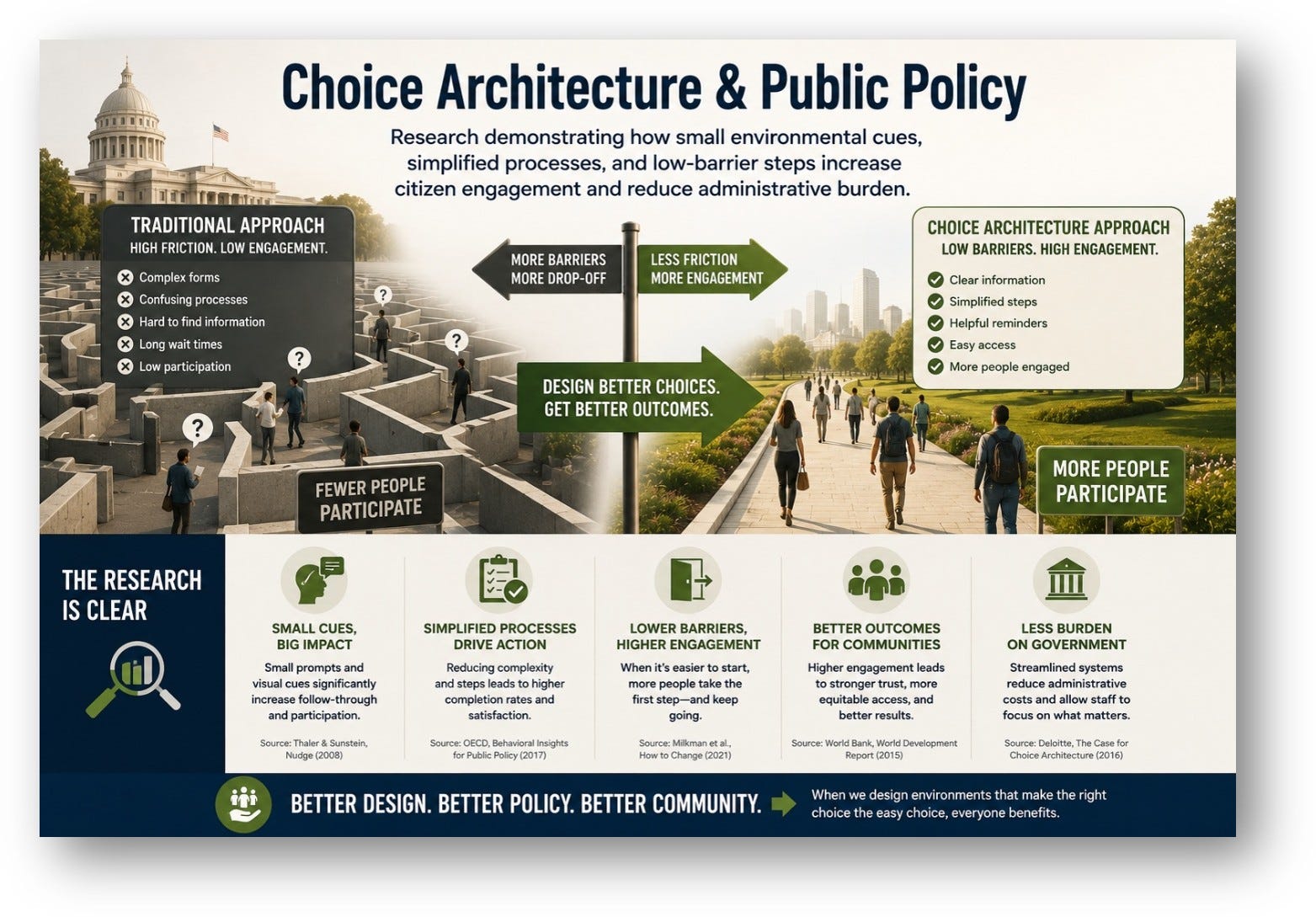
Szu‑chi Huang’s research further shows that long‑term commitments succeed when early stages focus on small wins, and later stages shift toward the larger goal. A well‑designed homeschooling support system would mirror this: reduce friction at the beginning, build momentum through small successes, and then help families expand into deeper learning as confidence grows.
In this way, the Model Resolution is not only a funding mechanism — it is a behavioral architecture. It recognizes that families thrive when systems are designed around how people actually build habits, not how institutions wish they would. By lowering barriers, simplifying choices, and supporting small steps, municipalities can help parents become consistently engaged partners in their children’s education.
And the benefits extend beyond academics. Homeschooling strengthens family bonds, deepens communication, and creates shared experiences that enrich both the student and the caregiver. These are not sentimental side effects. They are developmental assets that shape confidence, resilience, and identity. Restoring the parent as the primary educator of the child is not only compatible with homeschooling — it is beneficial even within traditional education, where parents and teachers can partner more effectively to support a child’s growth.

Critics often argue that some parents are not engaged enough to support homeschooling. But disengagement is not a cause — it is a symptom of systems that have marginalized families for generations. When parents are respected, informed, and empowered, engagement rises. When they are sidelined, it declines. Homeschooling, supported by municipal funding and modern technology, creates the very engagement critics say is missing.
This Model Resolution is not anti‑school. It is pro‑child. It is pro‑family. It is pro‑future. It recognizes that one system cannot meet every need, and that equity requires flexibility. It acknowledges that the future of work will demand adaptability, digital literacy, and self‑directed learning — competencies that rigid systems struggle to cultivate.
Most importantly, it affirms that municipalities do not have to wait for state or federal action. They can lead. They can innovate. They can imagine new pathways that strengthen families, expand opportunity, and prepare young people for the world they are entering, not the world we remember.
The Model Resolution Series exists to raise the standard of public discourse — to show what is possible when we stop asking, “What are we allowed to do?” and start asking, “What do our communities need?”
This Resolution is one answer. It is not the only one. But it is a beginning — a blueprint for municipalities willing to think differently, act boldly, and put the child, not the system, at the center of their educational vision.
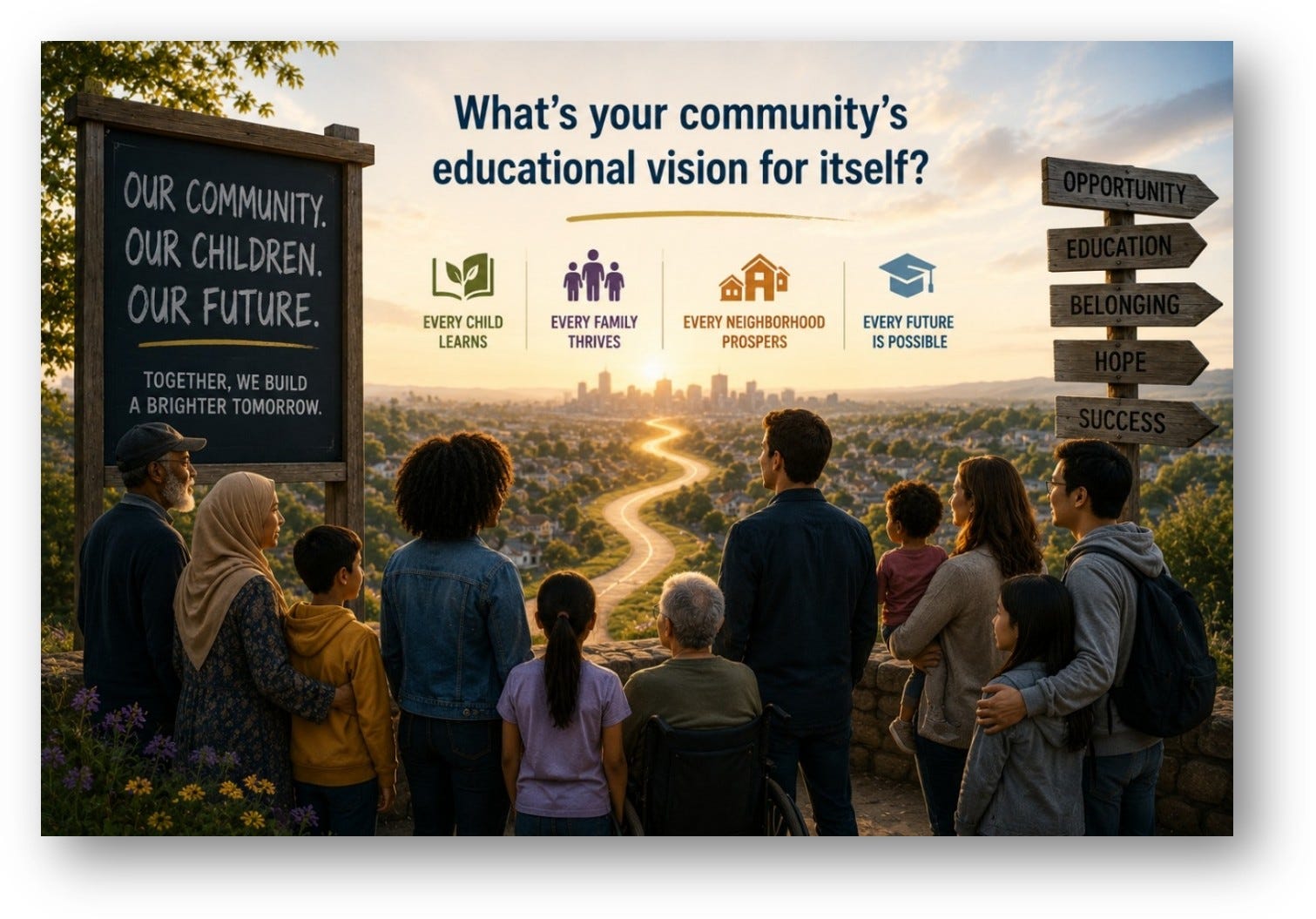
What’s your community’s educational vision for itself?
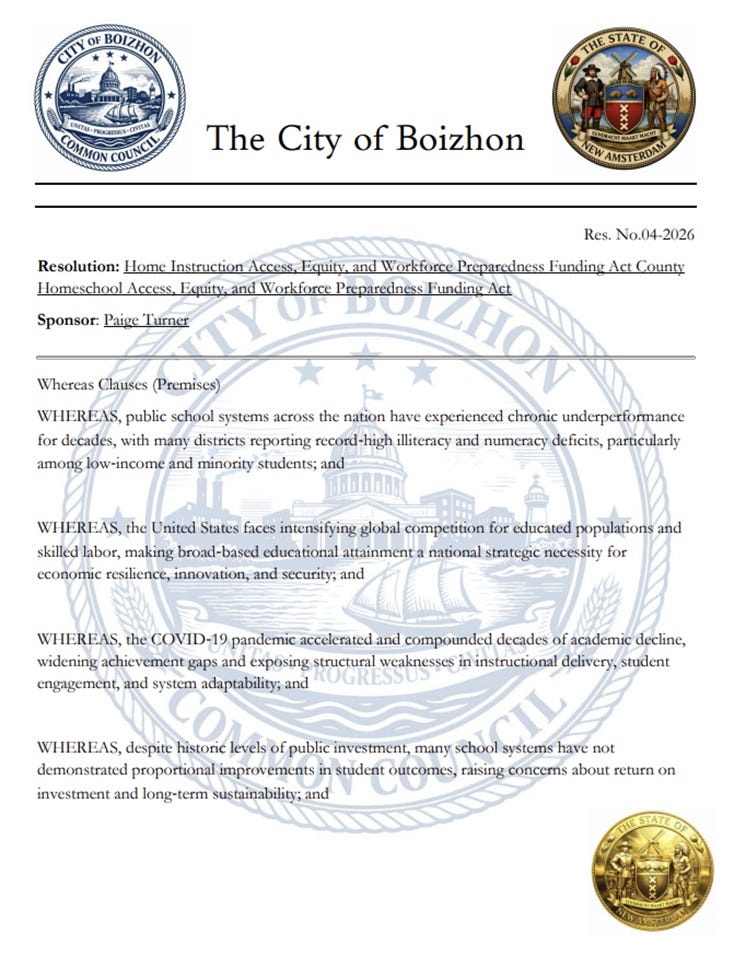
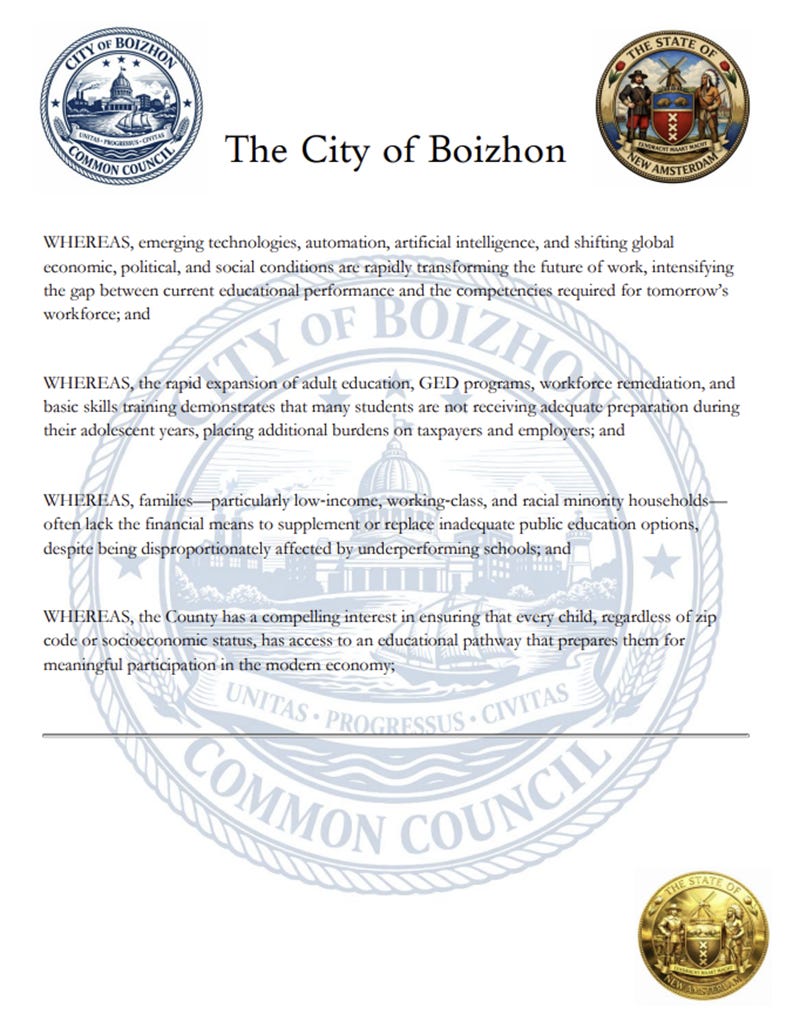
“For municipalities ready to act, the following Model Resolution offers a practical, immediate pathway to implement this vision.”
Further Reading:
· New York Times — “Why U.S. Test Scores Are in a ‘Generation‑Long Decline’” (Referenced for national achievement trends and structural decline in academic performance.)
· P2Solutions — “Teacher Shortages: A Preventable Workforce Crisis: Calling for the Proactive Prevention of Teacher Shortages Through the Use of State of New Amsterdam Department of Labor Occupational Projections and Publicly Available Workforce Data” (Jan. 2026) (Referenced for workforce‑planning failures and preventable structural shortages.)
· Buffalo Public Schools Budget Analysis
https://bps-budget.vercel.app/
(Referenced for structural misalignment between spending and outcomes in a major urban district.)
· Substack Notes — Buffalo Public Schools Budget Collaboration (Referenced for additional context on the collaborative analysis and public‑facing commentary.)
· Stanford Behavior Design Lab —
https://behaviordesign.stanford.edu/
(Referenced for behavioral‑science principles, Tiny Habits methodology, and environmental design frameworks that inform how municipalities can support parental engagement through small‑step, low‑friction educational pathways.)